
Attic insulation in Cudahy CA - rooms that stay cooler under a hot summer roof
Hot rooms, drafts or a power bill that climbs every summer? We fix what's wrong in the attic first, then insulate so it actually helps.
- Licensed and insured.
- Free quotes on site.
- Expect a reply within 1 business day.
What's involved in insulating an attic in Cudahy?
Attic insulation in Cudahy means adding insulating material across your attic floor so the rooms below stay cooler in summer and warmer in winter, and it works best when the roof, fans and wiring above your ceiling are sorted out first.
Most people who call us have a room that won't cool down or a draft they can't track down, and the house is usually old enough that whatever's in the attic has been up there for decades. The price moves with the size of the attic floor, the material, how much is already there and whether anything has to be fixed or pulled out first, and the schedule turns mostly on those same repairs and on any permit your city wants. The estimate I write after seeing your attic lays out what we'd do first and why, so you know your own number before you decide. We're based in Cudahy and work in many cities nearby, so ask even if yours isn't listed on the site.
Is attic insulation the right fix for your house?
Hot rooms under the roof
If the rooms under the attic heat up every afternoon, the attic floor usually isn't holding the heat back.
Thin or flattened insulation
When you can see the tops of the ceiling joists through old insulation, there's room to add more.
An older house
Older homes around here often have an early layer that's settled, so a careful top-up usually helps.
The room over the garage
That room often sits under a thin, patchy attic and stays hotter than the rest of the house.
How we handle attic insulation
I start every attic job by looking at what's up there now, along with the roof, the vent fans and the wiring, because insulation laid over a problem just hides it. A roof leak gets fixed first, any live knob-and-tube wiring, the old wiring strung on porcelain knobs, gets replaced for fire safety, and bathroom, kitchen and dryer fans have to vent outdoors instead of into the attic, so plan some time and budget for those ahead of the insulation. Once those check out, our crew air seals the attic floor, closing every gap around pipes, wires, lights and the hatch, then lays down the material that fits your attic, keeping the eave vents clear so air still moves through and running it full depth out to the edges, where it usually comes up short.
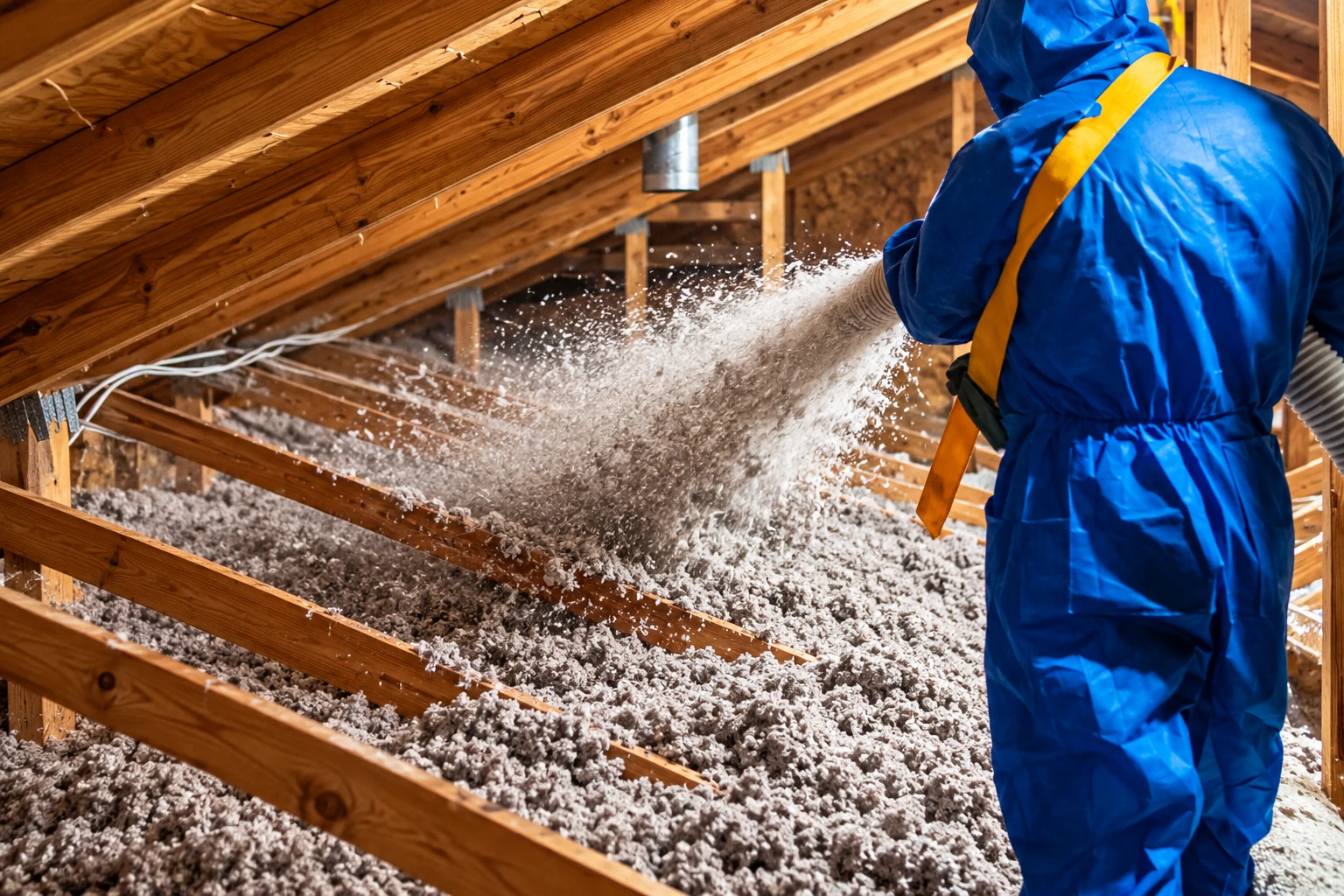
A lot of vented attics around here end up with blown-in insulation, loose fill blown through a hose so it settles into every bay between the joists. When the problem isn't only overhead, I'd rather look at the walls and crawl space too and treat it as a home insulation job than keep adding inches to an attic that was never the real cause.
Top up what's there
When the existing layer is dry and just thin, we seal the gaps through it and add loose fill on top. It's usually the simplest way to get a hot attic back in shape.
Clear out and start over
If the old insulation got soaked by a past roof leak or has packed down into a crust, adding more on top only buries the problem. We take it out with insulation removal, then seal and start fresh.
Batts for an open attic
Fiberglass batts, pre-cut blankets laid between the joists, fit an attic with even framing and room to move. They're easy to lift later if someone needs to reach a light or a wire.
What happens when you call about attic insulation in Cudahy?
Call or send us a message
Call (213) 338-1994 or use the form, and we'll set up a time for me to come out. Pick a time when you can be home, because I like to look at the attic with you.
I look at the attic with you
I check what's up there and how deep it is, plus the roof, the fans and the wiring, and walk you through what I found. The estimate spells out what we'd do first and why, so you can see where the money goes before you decide.
We fix, seal, then insulate
If you go ahead, we sort out any permit, handle the safety items and seal the attic floor before any insulation goes in. When a Cudahy inspection is part of the job, the city holds inspections on Monday, Tuesday and Thursday and confirms a morning or afternoon window, so we plan the work around it.
I walk the finished attic
Once our installers wrap up, I go back up and check the coverage, especially at the edges and around the hatch where it tends to run thin. Then I walk the finished job with you and show you what we did.
Foam or loose fill for attic insulation?
Sealing plus loose fill usually wins, unless ducts live up there.
Spray foam costs more, and it seals air at the same time it insulates. In most vented attics I'd rather seal the gaps by hand and top up with loose fill, because that usually gets you where you need to be for less, and you can add to it later.
The first thing I ask is whether your ducts run through the attic. A vented attic runs hot in summer and cold in winter, so heating or cooling air in ducts up there costs more, especially when they leak, and that's when foam at the roofline can be worth it.
Examples of insulation work
Take a look through these examples of insulation work, from blown-in attics to spray foam, to get a feel for what each kind looks like.
Ask for your attic insulation estimate
Tell us the attic's rough square footage and anything you know about roof leaks, old wiring, fan vents or vermiculite up there. We reply within one business day to set up a free on-site estimate, and there's no obligation.
Why Cudahy homeowners call Landmark Cudahy Spray Foam Insulation for their attics
The owner checks every attic
I come out to look at every job and give the estimate myself, and I'm on site to check our installers' work. You deal with the same person from the first look to the final walk-through.
Ask us about our license
We're licensed and insured. California's license board has its own classification for contractors who install insulation, so it's fair to ask any crew you're comparing which license they hold.
Built around older Cudahy houses
Most of our calls come from older houses around Cudahy, where years of patch jobs can hide a leak, a buried vent or old wiring up top. I'd rather tell you a job isn't worth doing than sell you one that won't help.
Lived-in homes since 2021
I started out insulating new houses on open framing, and we've worked in homes people already live in since 2021. Our work is backed by our satisfaction guarantee, so call (213) 338-1994 or send us a message to get started.
Attic insulation questions we hear
What does attic insulation cost around Cudahy?
Attic insulation installation in the Los Angeles area usually costs about $1 to $4 per square foot of attic. Where yours lands depends on the material, how much is already up there and whether old insulation has to come out, and repairs like a roof leak or old wiring come on top of that. I'll go over your own number on site after I've seen the attic.
Which insulation is best for a vented attic floor?
Loose-fill fiber and fiberglass batts are the least expensive types of insulation, and both are good choices for the floor of a vented attic. Which one fits depends on your framing and what's already there, and I'll tell you which I'd use once I've been up there.
What should I do if my attic has old vermiculite insulation?
The safest first step is to leave it alone and treat it as if it may contain asbestos. If you want it removed, that's work for a trained, accredited asbestos abatement contractor that's separate from whoever assessed it, so if I'm the one who spots it, another company does the removal and we insulate afterward.
What causes one room to stay hot even with insulation in the attic?
Usually it's thin insulation plus air leaking up through gaps in the ceiling, which gives the attic's heat an easy way down into the room. Coverage that's deep in the middle and thin at the edges is another common cause, and so is an attic whose vents got buried. Once I'm up there I can usually tell which one it is.
How long does attic insulation take in an older house?
Most of the time goes into what has to happen before the insulation, like a roof repair, rewiring, fan venting or a permit, and the insulating itself is usually the shorter part. I'll give you the timing for your house at the estimate, once I've seen what's up there.
Do we have to leave the house while the attic is insulated?
For loose fill or batts you usually don't, because the work stays up in the attic and the crew comes and goes through the hatch. Spray foam is different, since the foam maker's instructions set the re-entry time, when you, the kids and the pets can come back in, so I go over that with you before we schedule.
Want to know what your attic needs?
I come out, look at the attic with you and give you an estimate that says what we'd do first and why.
Other work that goes with it
Local rules for attic insulation in Cudahy
In Cudahy, the city's Building and Safety Department enforces the building, plumbing, electrical and mechanical codes, and permit submission and issuance start with an appointment you request by email or phone. Whether insulation by itself needs a permit isn't something I'll guess at, and rules differ between cities and County areas, so we check with the building office that covers your address, and when a permit is needed we handle the paperwork and line up the inspection. The state's energy standards also cover insulation added to existing attics, and some of those rules depend on the climate zone your house sits in, so we work to the rules for your address.
Most houses we see around Cudahy are older, with attics that have had a few rounds of work and a thin layer packed down near the eaves. We find the same kinds of attics on jobs in South Gate and Bell Gardens, so we work the same way there, checking first, sealing next and insulating last.