
Basement insulation in Cudahy CA - a warmer, quieter room with walls that can dry
Cold, damp-smelling basement walls or a room you can't use yet? We find where the water's coming from first, then insulate so the space stays comfortable.
- Licensed and insured.
- Free quotes on site.
- Expect a reply within 1 business day.
What does insulating a basement in Cudahy involve?
Basement insulation in Cudahy adds insulation to the walls of a below-grade room, usually batts behind drywall or foam on the concrete, so the space holds its temperature and carries less noise. Done in the right order, it turns a cold, damp-feeling room into one you can actually use.
Most people call because the basement smells damp, feels cold, or they want to finish it into a room, and the job usually turns out to be about more than the insulation itself. The price moves with how much wall you have, which material suits it, whether the walls need framing and drywall, and whether leaks, cracks or a gas appliance need attention first. The schedule turns on that same prep plus any permit and inspection, and the estimate lays out what we'd do first and why, so you see your own number before anything starts.
Is basement insulation right for your house?
A basement you want to use
If you're turning the space into a bedroom, office or den, insulated walls make it livable year-round.
Cold floors over the basement
Insulating the basement walls keeps the rooms above from sitting over a cold, drafty space.
Noise coming up from below
Insulated walls cut down on noise when the basement holds the laundry, a workshop or a TV room.
A dry basement in an older house
Once the walls stay dry, an older cellar or half-basement is usually worth insulating instead of leaving bare concrete.
How we handle basement insulation
Water comes first, so I check your basement walls for moisture getting in before we cover anything, because insulation over a damp wall just hides the problem. I also look for cracks or bowing in the foundation, since covering a wall with structural trouble can hide it and sometimes make it worse, so that gets fixed before we frame anything. If your furnace or water heater is down there and sends its exhaust up the flue on natural draft alone, we plan the air sealing around it, because tightening up the basement can leave that flame short of air. With those settled, we talk through how the wall gets built so it can dry out instead of trapping damp, then our installers seal the gaps, insulate and close it up.
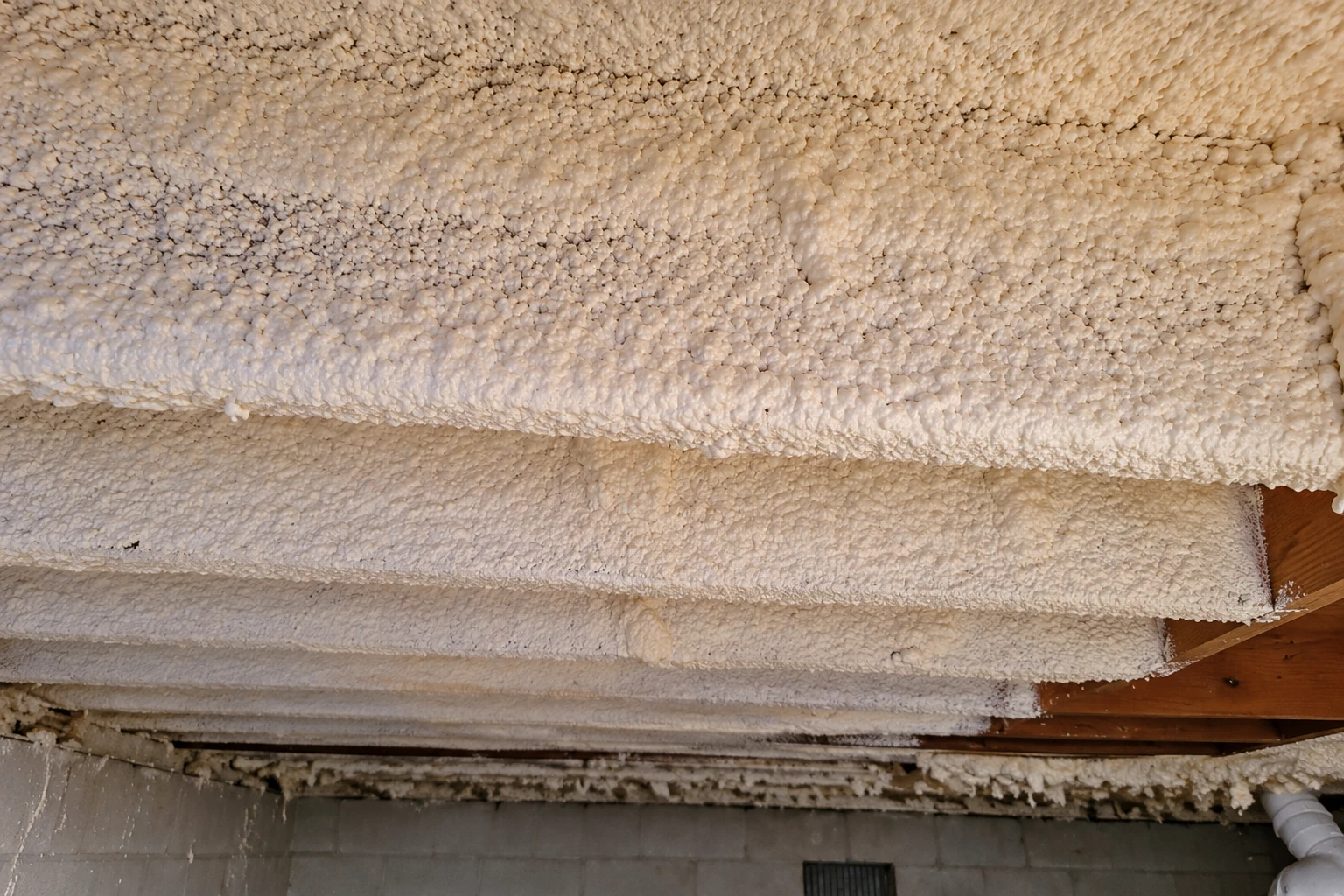
On bare concrete, closed-cell foam insulation, the dense kind that blocks moisture as well as heat, usually makes the most sense. Open-cell foam insulation is softer and lighter, so it fits framed interior walls and sound control better than a cold foundation wall. If what's under your house turns out to be a crawl space, crawl space insulation is the job you want.
Batts behind drywall
Suits a dry basement you're finishing anyway, since the framing and drywall are going in regardless and batts fill the cavities for the least money.
Closed-cell foam on the concrete
Suits bare foundation walls and the drafty framing along the top, because it seals air and holds back moisture in one layer, though it costs more.
Foam board with a framed wall
Suits owners who want a finished room with a break between the cold concrete and the studs, at a price between batts and spray foam.
What happens after you call about basement insulation?
Call or send a message
Call (213) 338-1994 or use the form, and we'll get back to you to set up a visit. Tell us a little about the basement so I know what I'm walking into.
I look at the basement with you
I check the walls for water, cracks and gas appliances with you and measure the space. The estimate tells you what we'd do first and why, so you see where the money goes before you decide.
We handle prep, then insulate
When an inspection is part of the job, we book it, and the city holds inspections on Monday, Tuesday and Thursday, so the schedule works around those days. Our installers take care of the safety items and air sealing first, then insulate.
We walk the finished basement
When the walls are done, I walk the basement with you and show you what went in where. It's your chance to ask anything before we pack up.
Foam or batts for basement insulation?
Batts for a dry framed wall, foam on bare concrete.
Foam costs more, but it seals air and insulates in one pass, and on bare concrete it keeps damp room air off the cold wall where it would otherwise condense. If the basement is dry and you're framing walls anyway, sealing the gaps first and filling the cavities with batts usually gets you most of the way for less.
What tips it is the wall itself. I'd rather you put money into fixing a water problem than into pricier insulation over one, and if the concrete still runs damp after the fix, foam is the better bet. When both make sense, I'll talk through both with you.
Examples of insulation work
Look through these examples of insulation work, from attics and walls to crawl spaces and basements, to picture what a finished job can look like.
Get a basement insulation estimate that starts with the walls
Tell us the rough wall area in square feet, any leaks you've noticed and which gas appliances are down there. We'll reply within one business day to set up a free on-site estimate with no obligation.
Why Cudahy homeowners call Landmark Cudahy Spray Foam Insulation for basement work
I do every estimate myself
I come out to look at every job and give the estimate myself, and our installers do the work while I'm on site to check it. The person who spotted the damp corner is the one making sure it got handled.
Five years in older houses
We've been in business since 2021, and most of our calls come from homeowners in older houses around Cudahy. Those houses taught me to find why a room stays cold before deciding what goes on the wall.
Licensed and insured for this work
We're licensed and insured, so that's settled before anyone starts on your foundation walls. I'd ask the same of anyone you let work in your basement.
Straight talk on what's worth doing
I'd rather tell you a job isn't worth doing than sell you one that won't help, and in a basement that sometimes means sorting out a leak before any insulation goes in. Call (213) 338-1994 or send a message through the form, and I'll come take a look.
Basement insulation questions
How much does basement insulation cost near Cudahy?
Basement insulation in the Los Angeles area usually costs about $1.50 to $4.50 per square foot. Where your job lands depends on the material, whether the walls need framing and drywall, and whether water or cracks have to be fixed first. My estimate puts your own number on it.
Do I need to fix leaks before insulating my basement?
Yes, water has to be dealt with before anything covers the wall. The usual practice is to check the walls for water coming in, fix it first, and steer the big sources like gutters, downspouts and runoff away from the foundation walls. Insulation over a leak just hides it while it soaks.
What is the best way to keep moisture from getting trapped in a basement wall?
Skip plastic sheeting and foil facings on the room side of fiber insulation, because in a basement they can trap moisture inside the wall. Kraft-faced fiberglass batts, the kind with a paper backing, or latex paint on the drywall are the better choices. Ask any installer which one they plan, and I'll tell you mine on the estimate.
Who is licensed to install insulation in California?
The Contractors State License Board lists insulation and acoustical contractors as the license class for installing insulating material. Ask to see a contractor's license before anyone starts on your walls.
Does spray foam on basement walls have to be covered?
Yes, foam on basement walls has to be covered with gypsum board, the material drywall is made of, as a thermal barrier to meet building code. Bare foam isn't a finished job, so plan the drywall into your budget if you choose foam.
How do I know if my basement rim joist needs insulation?
If the rim joist, the framing that sits on top of the foundation wall, forms the edge of your heated space, it should be insulated. In most basements it does, and it's one of the draftiest spots in the house because of all the gaps where wood meets concrete.
Want a straight answer on your basement?
I'll come look at the walls with you and give you a free estimate that says what we'd do first and why.
Other work that goes with it
Basement insulation in Cudahy, permits and the houses we see
The City of Cudahy requires a building permit for new structures and for remodels at businesses, and its building and safety office issues permits by appointment, but that list doesn't settle whether insulating your basement needs one. Rules differ between cities and County areas, so we check with the building office that covers your address, and when a permit is needed, we handle the paperwork and line up the inspection. The state Energy Code also sets efficiency rules for alterations to existing homes, so any code question about your wall goes into that same check.
Most houses around here sit on a slab or a crawl space, so when we do find a basement it's usually a cellar or half-basement under an older house, often shared with a water heater or furnace. We see the same mix on jobs in South Gate and Huntington Park, and we work in plenty of cities nearby, so ask even if yours isn't listed.